There is something about a box, something tempting and intimate, something performative and, well, contained. A box is a perfect implement for teaching, whether it be a final presentation for a student or as you begin to literally unpack the concepts in a lesson. A box has its own rules, as you speak around it it becomes a portal. As you begin to teach your lesson the materials in the box take a life of their own. It doesn’t matter if the box has printouts of pictures, natural items, or small toys, it’s meaning comes from the story you have fabricated around it. While the concept sounds like it’s best suited for elementary students (and it could be), I believe this form can be translated to any age group. Of course, it’s the inside that counts.
Joseph Cornell was a great inspiration to me when I was young. He was an artist who lived in New York City in the mid 1900’s. He spent most of his life at home in Queens, yet made a massive impact on the artworld by sanctifying the power of the box. Cornell created surprising, dark, and imaginative assemblages, bringing a world to life via the materials he had found and collected throughout New York City. The relationships between these objects brought together in the confines of the box gave the sense of a window. He would often devote his artworks to actresses or artists he admired. He called his collections “part research project, part devotional act.” They are simultaneously intimate and durable. It is as if they can be carried by some traveling artisan who carries worlds on their back. Aren’t teachers a bit like the traveling bards of yore, small carriers of knowledge, storytellers of the world’s and societies truths?
There are several important elements to the box as either lesson plan or final product for a student to show their work: there must be a physical enclosure, often the enclosure is part of the presentation and informative to both the narrative that the box is creating, and how to interact with it. Materials inside the box: The way these are organized is also interesting to consider. There should be an instruction, written or spoken, on how the box is used or what is inside it. The objects in this box should feel like they are objects of discovery, able to be uncovered by the students. A box that can be manipulated can be a powerful aspect to this lesson, but it is not required.
If students are making this box for their final project, there should be written or auditory informational material as part of the box. The student is creating a window into the world of what they’ve learned. Allow it to be a place of magic, a place of deep consideration, and devotion toward the story they are telling.
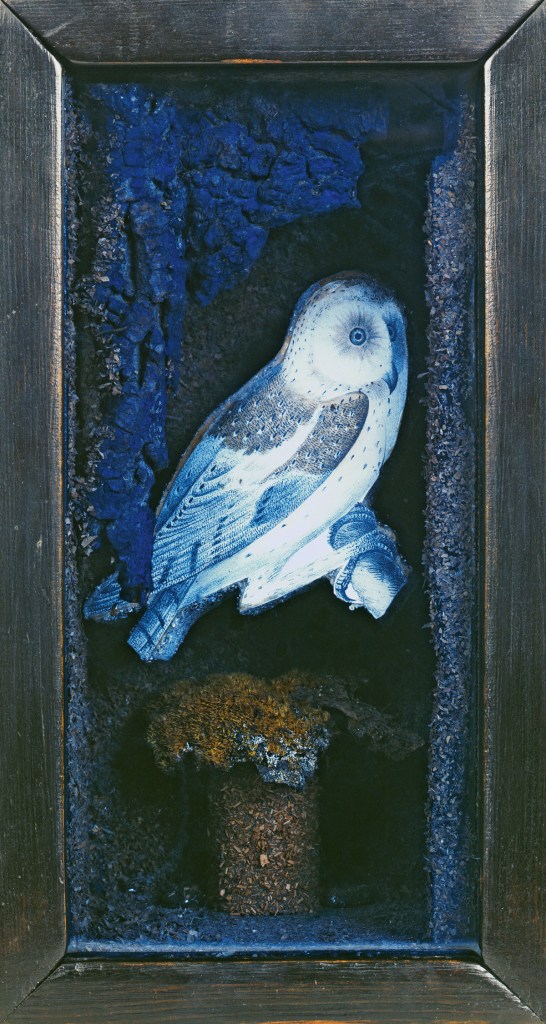
Joseph Cornell Untitled (Owl Habitat), 1940s
 Bending Tree Education