The Flower and the Myth
The botanical writing program ends with a book, or at least a culminating publication of the student’s work. And after many conversations and activities that can be completed inside, we will take this session to the outdoors.
On the third day of the program look in pavement cracks where plantain takes hold, sides of buildings where empress trees push forth, go to lawns or meadows. Go into the woods and look at plants. It doesn’t matter where you are. I did this in the middle of Manhattan; any place with green space will do.
When you arrive, tell a myth about a plant. After you have told this myth, discuss with the students how the plant was portrayed. What might this story be teaching the listener about the culture and about the plant itself? Have pictures of the plants and prepare some facts to give them context.
Make a scavenger hunt for flowers. Flowers, unlike the leaves and stems, want to be found. Make a scavenger hunt that allows the student to pay attention to flower formations. Observe inflorescence structure, and the flower formation itself, look at color and shape. Look for pollinators. A few examples of types of plants the students can find can be the following (and add pictures to these):
umbel
raceme
seed pods: all the ways that seed pods distribute, is this stick, light, heavy, sweet tasting for animals/humans?
toothed leaves
smooth leaves
alternate leaves
trichomes (tiny hairs)
smooth
five petals
three petals
composite flowers
colors

Once the scavenger hunt is complete, have the students search for the plants they are been researching (I recommend making sure they can find these plants, it’s much more valuable if the student can see and identify the plant in the “wild”). Give them time to sit with it and make note of what they see. Are there animals around it? Is it next to other plants? Has it been eaten? What is the soil and sun like where it is?
They already know the science behind their plant, and they know a some of its ethnobotanical background. Have the students write an original myth about how their plant came to be. Come back and share their myths.
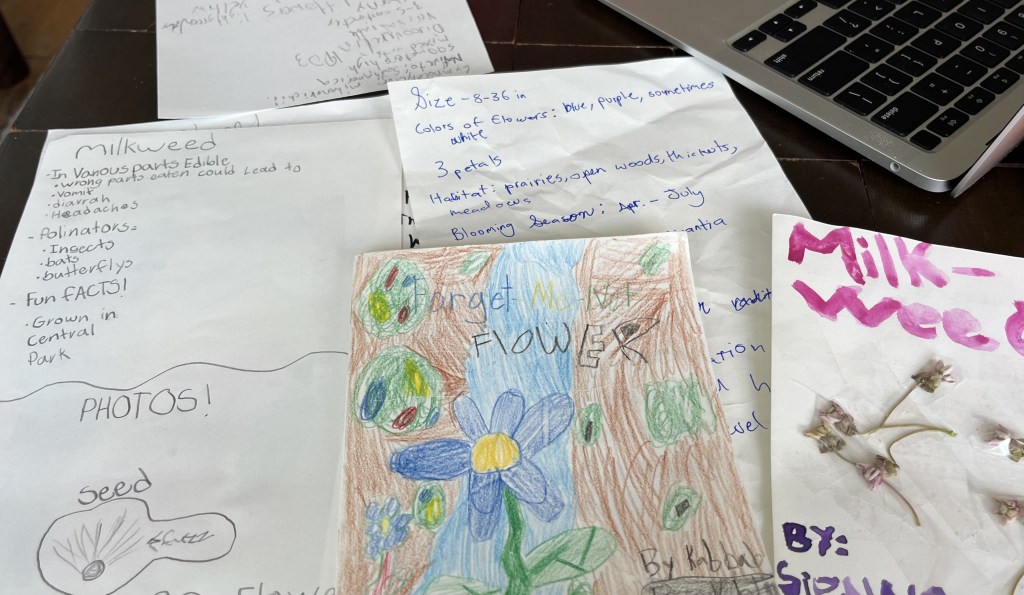
The student then has the chance in the last session to edit their pieces and put together a publication that includes illustrations of the plants, the myth, and a short write up of their scientific and ethnobotanical research on the plant. Include in this book one of the pollinators and one plant that these plants are related to.
Consider: why is it important to learn about these plants? What have they learned? Plants give us so much. We are collecting the information and inspiration so that we can share our knowledge. We will be carrying the stories about this plant and its our responsibility to pass them along to others – not once, but many times through our lives. To start, tell a chosen partner about this plant or tell the whole class about it.
 Bending Tree Education