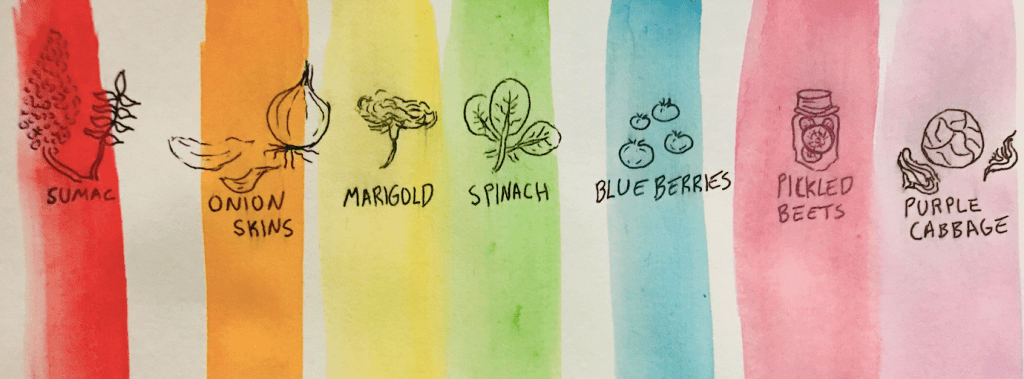
One of my favorite teaching (and learning) tools comes from paying attention to the details. If you get small enough, specific enough, anything and everything has a deep, interesting, and fulfilling lesson to teach. One of the most important aspects of learning is learning how to ask questions about those small things, because in them lie the secret to the big things.
I am the type of person who doesn’t like to go shopping. I love clothing, I love having clothing. But to be brutally honest, I think that I become emotionally attached to my clothes and feel sad to throw them away. I know, I know this sounds crazy. My clothes don’t have feelings… But, do they?
One such item was a shirt, gifted to me by family after their trip to Italy. They bought my partner and I slightly matching shirts, probably from some tourist shop, because they have whimsical pictures on them from Sardinia. This style is very 90’s, which is when I grew up, hence, keeping clothing since around that time, and style. I have a difficult time with change but I’m working on it. I don’t want to talk about how grimy my clothes are, but I do want to say how much I really did like this shirt. Except it was white.
It took me three years to get my first stain, and the stain was rust. No amount of water, hot or cold, is going to bother the rust at all. So there I was (yes, it appears there is a bit of rust on the top of the towel hanger that connects to the door in the bathroom), what do I do with a stained white shirt? I’ll tell you one thing I’m not going to do: let rust get in the way of the three beautiful summers we had together. I’m not giving up that easy (and apparently, bleach doesn’t once cross my mind). These are moments in life when you learn, when you commit to solving a problem, when you commit to an action. And what could have been a loss became a moment of connection and discovery.
So this is where I begin our lesson: Natural Dyeing.
Why? Colors are the language of light. The power of a color can operate more viscerally than language. And colors appear in the natural environment. Lessons about color can range from art, to social studies, and science.
There are many books that discuss the history of color, including, but not limited to The Secret Lives of Color by Kassia St. Clair, which could be an interesting companion on your journey with older students. With much younger students Herve Tullet has fantastic books about color. Look at the colors that various animals see.
Discuss: why do we think humans adapt to see the colors we see. What do colors tell us, how does that relate to the natural environment?
Write and consider: (Take notes on a journal or post-its) Locate your natural dyeing project in time and place. How has, for example, purple been used in dyeing historically. You can do a research project, for example, on orange. How do different places in the world create orange? What is its significance?
Project: Make an Orange Book, diving deeply into the color. Write an orange essay, following it in a specific art historical or cultural trajectory.
Now, for chemistry, add this finished project to the research you’ve done on the color, either through writing, video, photography or installation: make sure to research mordants, and the minerals that make the chemical bonding occur in the water.
You will need your natural dye material, a white fiber, preferably protein, like wool or cotton, or linen; alum; white vinegar; gloves.
Create a lukewarm mordant bath using the alum for thirty minutes, then let it dry.
Create the dye bath so that it is nearly boiling and add the material to this, stirring it, and letting it out when it cools.
Research natural dyes. Here are some great books:
https://www.abebooks.com/9781909492158/Natural-Colorants-Dyeing-Lake-Pigments-1909492159/plp
 Bending Tree Education